

First Aid Kits: Are You Prepared for an Emergency?

When it comes to a first aid kit you basically have two options: either you buy one premade or put one together yourself. In either case, it is very important that you understand what needs to be in your first aid kit and why, as well as what kinds of extra things you should always have in your vehicle. Ultimately, the best first aid kit for your car is one that has everything you’ll need in an emergency. If you buy one and find it lacking, that’s not the end of the world – just add to it yourself and make it complete.
Personally, we like assembling our own first aid kits for our vehicles here at Kings Ford in Cincinnati, OH, because then we know exactly what is in them. There can also be a sense of mystery and fear associated with the very idea of a first aid kit since it’s tied to an emergency or tragedy. By putting your own kit together, you take that element out of it and become familiar with the supplies you have, which better prepares you for an emergency.
Please remember, this is not legal or healthcare advice, and if you find yourself in any kind of emergency, contact emergency services immediately for help. If you need more advice or have more questions about first aid kits, healthcare workers and emergency specialists are very happy to answer them and help you get prepared.
The Right Container
This may seem like a strange place to start when looking into the best first aid kit for your car, but it’s actually very important. Whether you are buying a complete first aid kit or putting one together yourself, you need a proper container for all of your items. This keeps it all together for you and also ensures all of your emergency supplies are in one place, easy to find.
Consider choosing a sturdy box, like a tackle box, rather than a bag, since it can’t be squished or easily damaged. You should label it clearly so that if someone else needs to access it, they will know what it is just by looking at it. Never choose a first aid kit that can be locked and don’t install a lock yourself because you need to be able to get into it quickly.
Proper Supplies

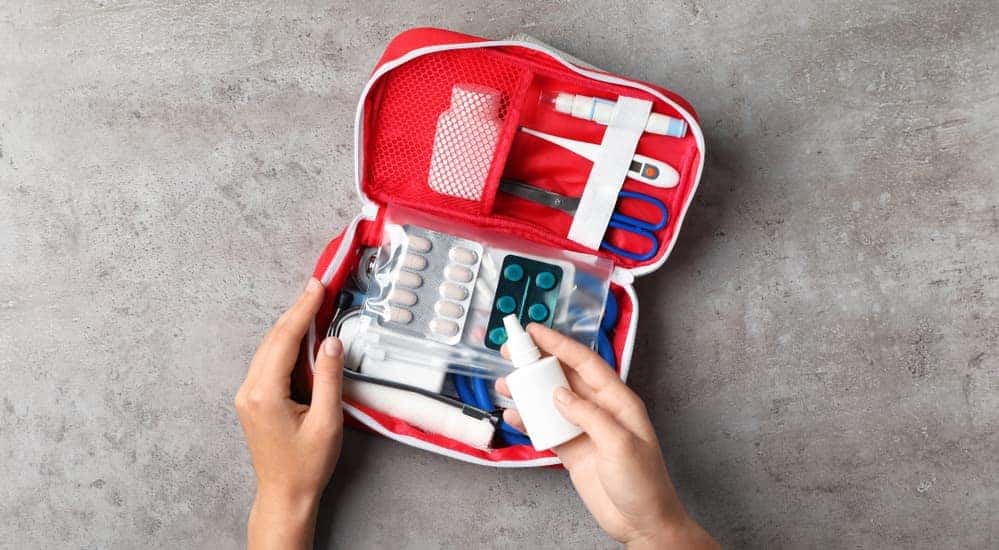
First things first, the following supplies should be included in your first aid kit to ensure you can handle minor to moderate injuries and react to different situations properly. They are:
- Adhesive bandages, at least a dozen though two dozen is ideal.
- Absorbent compress dressings, at least 5×9 inches in size, one or two of them.
- An adhesive cloth tape, at least 1 inch wide and several yards long.
- A roll of gauze bandages that is 3 inches wide.
- A roll of gauze bandages that is 4 inches wide.
- Several 3×3 sterile gauze pads, at least two but five is ideal.
- A large triangular bandage that can be used as a sling, two is preferable.
- Adhesive tape for holding bandages in place.
- Instant cold compress, at least one of these.
- A breathing barrier or CPR mask for mouth-to-mouth resuscitation.
- Tweezers.
- A digital thermometer.
- Non-latex gloves, in a size that fits you, at least two pair.
- Curved scissors used in healthcare work to cut clothing or bandages, non-pointed.
- Cotton balls and cotton swabs, a half dozen or dozen of each should be sufficient.
- An emergency blanket.
- Hand sanitizer.
Medications and Treatments
Once you have all of the supplies that you need, then you should also stock up your first aid kit with a small selection of medications and medical treatments. For one thing, consider placing a small dosage of any medication that is critical to your health, such as a prescribed drug, in your first aid kit. This way, you always have access to it in an emergency situation or if your vehicle breaks down.
Some specific medications and treatments to include in the first aid kit for your car include:
- Antibiotic ointment packets to clean wounds, at least five of these.
- Antiseptic wipe packets, at least five of these.
- Small packets of aspirin, at least two of these.
- Hydrocortisone ointment packets, at least two of these.
- Small packets of antihistamine pills, at least two of these.
- Aloe Vera or anti-burn gel, for treating minor and mild burns.
- Sunscreen, high SPF for better protection.
Child and Infant Variations
It is important to remember that most of these medications are designed for adults to use, so make sure you include child and infant variations of these treatments in the first aid kit for your car. This is particularly important if you have children, or if you have young children or infants that are often passengers in your vehicle. Even if you do not have kids and never have kids in your car, the ideal first aid kit for your car will still include these items so that if you arrive at the scene of an emergency with children involved, you can still help.
Just be very careful about the items you select and the possibility of allergic reactions. You’ll notice that the suggested medications are very limited in scope and cover only the most basic of needs. That is because things like antibiotic ointment and aspirin are not likely to cause an allergic reaction or make a condition worse. Carefully read the packaging on any medication you consider for the first aid kit for your car and do not include something that could be a danger to a person you’re trying to help.
Other Essential Items
You should also have some other items packed in your vehicle at all times so that you’ll be prepared in case of an emergency or if your vehicle breaks down unexpectedly. These items can be included with your first aid kit or located near it so you always know where to find them. Keeping them all together in the trunk of your car can work, but make sure there is trunk access through the rear seat so you can get to your first aid kit and supplies quickly. If you have an SUV, then it is easy to find room in the rear of your vehicle for these things.
Some extra emergency items you should always keep with you include:
- Blankets, these are in addition to the emergency blanket in your first aid kit.
- Water bottles, at least a few though as many as six or ten is better if you have a large family.
- Non-perishable foods, including things like almonds, peanuts, snack or trail mix, and non-perishable protein bars.
- A change of clothes, at the very least a pair of socks, pants, and shirt. An extra pair of shoes is also a good idea.
- Extra jackets and/or sweaters, these are particularly important in the winter.
- An orange triangle, tow strap, and jumper cables. Good items incase your car brakes down.
- A radio, again one that runs on a crank or can be manually charged is preferable.
Take Stock Regularly
While a lot of the items in the first aid kit for your car are not perishable, there are some things that are, such as some medications. Ointments and gels can also dry out over time, as can moist, sterilized wipes. Be sure to check these items regularly – at least once a year, though a couple of times each year is best. Replace them as needed so that you always have fresh supplies with you.
With food and water, be sure to check the expiration dates on them and replace them when necessary. Stay on top of your first aid kit and car supplies, especially if you have kids that might sneak the occasional handful of nuts or water bottle from your vehicle. Being prepared and knowing what you have can make a big difference in an emergency.

0 comment(s) so far on First Aid Kits: Are You Prepared for an Emergency?