

Eco-Friendly Escapades: The Ford Escape’s Sustainable Side
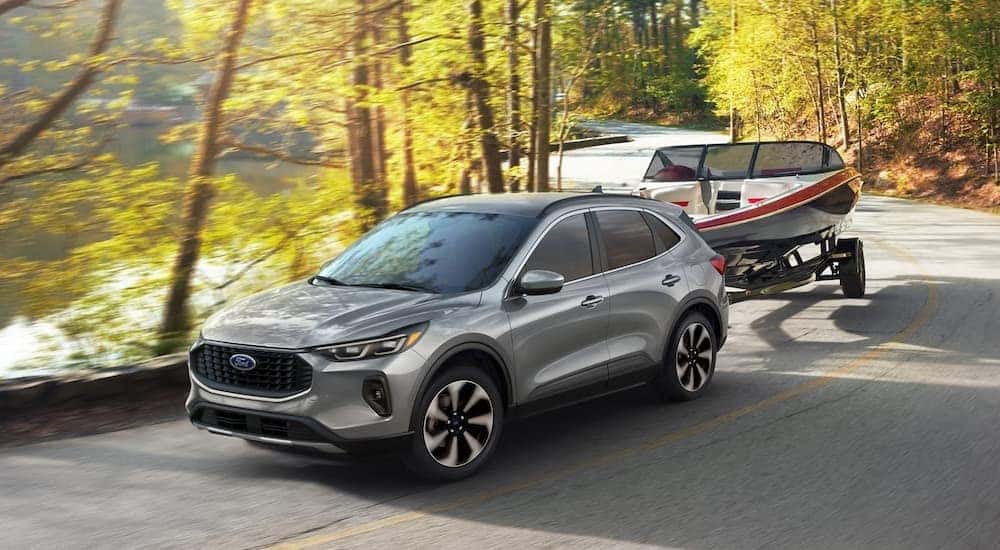
We’ve come a long way since the days when an SUV was automatically considered a gas-guzzler. Thanks to advances in automotive technology, you can get all of the versatility and interior space of an SUV without feeling guilty about your environmental impact (or spending an arm and a leg at the gas station). For a good example, look no further than the 2024 Ford Escape.
This compact SUV has an easily re-configurable cabin that’s perfect for keeping passengers comfortable and packing in plenty of cargo, and it’s also available in a range of efficient powertrains that minimize your dependence on fossil fuels. But while all of its available powertrains are capable and efficient, they each have their own pros and cons. So, which one is right for you? If you’re not sure, then you’ve come to the right place; let’s dive in and see what each option has to offer, both for you and for the planet.
Fuel Economy 101
Before we dive in, let’s quickly review the basics of fuel economy. If a vehicle runs on a fuel like gasoline or diesel, its fuel efficiency is measured in terms of miles per gallon (MPG). This is as simple as it sounds: how many miles can the vehicle travel on a single gallon of fuel? The higher the MPG, the more efficient the vehicle is.
According to the EPA, the average 2024 vehicle gets 28 MPG, so any rating larger than that can be considered “above average.” Fuel economy ratings use both a figure for city driving and a figure for highway driving, then combine the two into an averaged “city/highway combined” rating for its overall efficiency.
Things can get a little trickier with electric vehicles (EVs), including plug-in hybrid electric vehicles (PHEVs), because they get some or all of their power directly from an electric battery—and, unlike diesel or gasoline, electricity can’t be measured in gallons.
But in order to make sure that consumers can compare all kinds of vehicles without an advanced math degree, the EPA came up with a solution: MPGe (miles per gallon equivalent). The ‘e’ lets you know that the measurement of a gallon isn’t 100% accurate, but this figure is super helpful for seeing just how efficient PHEVs and EVs can be compared to traditional gas-powered counterparts.
Efficient Gas Powertrain
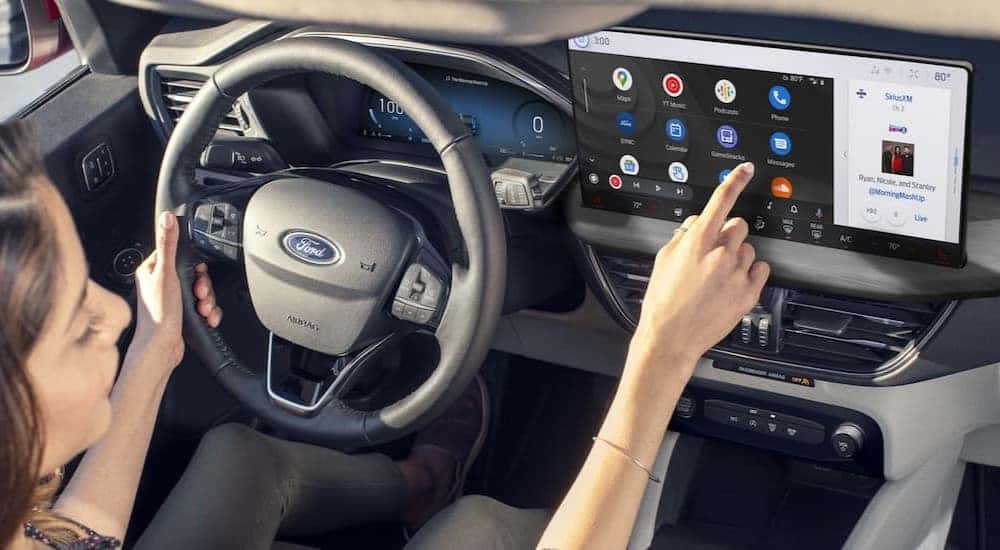
For the 2024 model year, the Escape has two traditional gas powertrains available. While hybrid powertrains are getting cheaper to produce, for now, they’re still somewhat more expensive and can remain out of reach for drivers on a tight budget. Luckily, you don’t have to upgrade to a hybrid powertrain to get an efficient Escape.
The entry-level 1.5L EcoBoost engine meets the 2024 average exactly when paired with all-wheel drive, getting a city/highway combined rating of 28 MPG (26 MPG in the city and 32 MPG on the highway). If you opt for front-wheel drive instead, you get an above-average fuel economy of 30 MPG, with up to 34 MPG on the highway.
The other engine is a 2.0L turbocharged four-cylinder. It provides more athletic driving dynamics at the expense of fuel economy, as it’s only available with AWD, which brings the combined rating down to 26 MPG. That’s still not bad for the performance it provides, but if you’re prioritizing sustainability, then this engine option is the one to avoid.
Easy-to-Drive Hybrid
Are you ready to move on from a fully gas-powered vehicle to something more efficient, but you’re worried about getting something that needs to be plugged in for a charge? That’s fair; not everyone has access to home charging—and while public charging stations are getting more and more common, they’re still not nearly as omnipresent as gas stations.
The hybrid Escape is the perfect solution to this problem. All you have to do is fill the tank up with gas like you normally would—you just won’t have to do it nearly as often! This powertrain uses a process called regenerative braking to charge its onboard battery, which in turn powers electric motors that supplement the gas engine. The energy that helps you go farther in a hybrid like this is otherwise lost as heat in a traditional gas-powered vehicle, so you’re not losing anything or using anything extra, and you gain plenty of efficiency!
While traditional gas-powered vehicles are almost always more efficient on the highway, hybrids tend to be more efficient for city driving. So, if a lot of your driving is done running errands around town, you’ll get even more bang for your buck out of a hybrid. The Escape Hybrid gets a highly impressive 42 MPG for city driving. But if you often take the freeway, don’t worry, as this hybrid’s 36 MPG rating for highway driving is still higher than what you’ll get on a non-hybrid option.
Together, these figures combine to give this hybrid an overall fuel economy rating of 39 MPG. And while the base powertrain loses 2 MPG of efficiency when you upgrade from FWD to AWD, the hybrid’s figures still stay the same, so you can get the extra traction that all-wheel drive provides without sacrificing a significant amount of efficiency.
Ultra-Efficient Plug-In Hybrid
This hybrid option doesn’t use as much gas as the traditional powertrain, but it still relies solely on fossil fuels. That puts you at the mercy of the roller coaster ride that is gas prices. But switching over to a fully electric vehicle can feel precarious as the country is still in the middle of building its charging infrastructure.
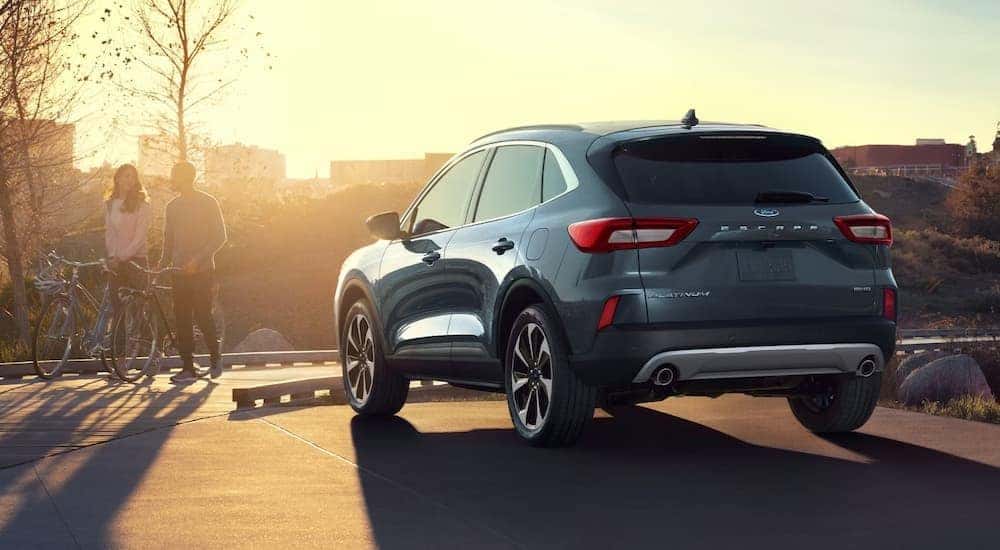
A plug-in hybrid gives you the best of both worlds and is a great way to transition from gas to electricity smoothly and painlessly. The Escape Plug-in Hybrid is a highly efficient hybrid even if you never plug it in. It gets 40 MPG with gasoline alone. But charge its battery directly—either at home or at a public charging station—and you can unlock a whopping 101 MPGe by making use of both the engine and a pair of electric motors!
For shorter trips, you don’t even need to use the engine at all; turn on electric-only mode, and you can get up to 37 miles of zero-emission range with every charge. Once you get a taste of how smooth and quiet driving on pure electric power can be, you’ll be scanning Ford’s press releases waiting for news of an Escape EV (or you might take a closer look at all that the Mustang Mach-E has to offer).
Going Green Doesn’t Necessitate a Compromise
Not so long ago, getting an eco-friendly car meant settling for something small and dull without the range to tackle longer road trips. But today, you can get a spacious SUV like the 2024 Escape with powertrains that aren’t just efficient but also capable and fun to drive.
And while you can go pretty far on a single tank in a traditional gas-powered model (up to 444 miles), the hybrid options take you even further. The hybrid has a total range of 558 miles, so you can do a lot of driving before you have to stop for a fillup. The plug-in hybrid’s range is slightly lower at 520 miles, but that’s on a single charge. If you charge up every day, you can go way longer between gas station stops, and if you take short drives in EV mode, you might almost never need a fuel break.
With options like these, Ford is leading the charge into a greener future where everyone can breathe easy.

0 comment(s) so far on Eco-Friendly Escapades: The Ford Escape’s Sustainable Side